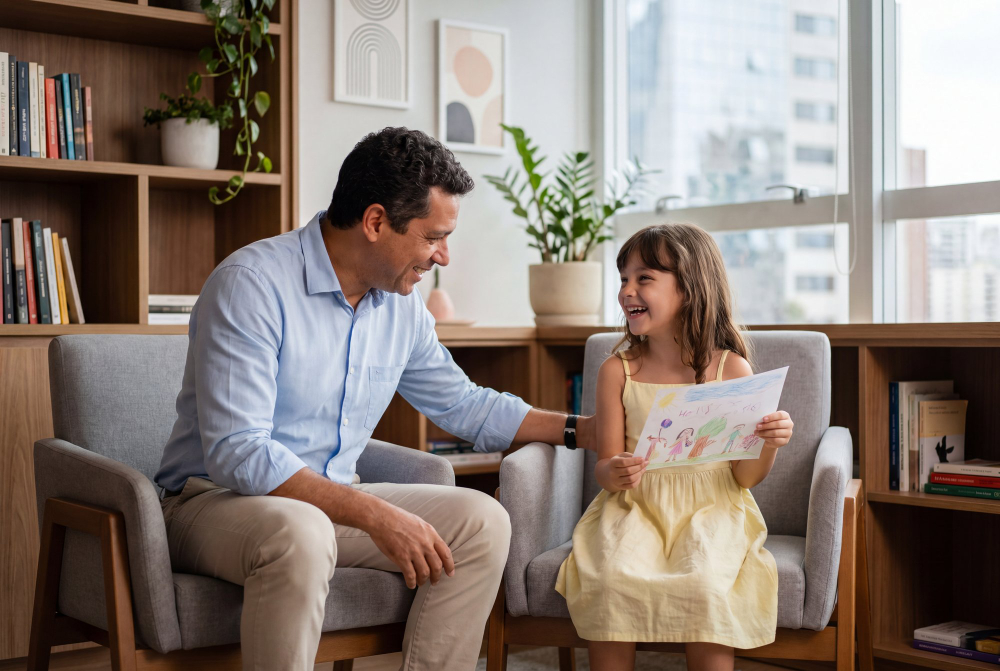
Introduction: What Is Healthy Communication With Children?
Building healthy communication with your child means talking and listening in a way that supports trust and understanding. When parents use clear and caring words, children feel safe to share their thoughts. In fact, healthy communication helps children learn about feelings, solve problems, and build strong relationships. According to the American Academy of Pediatrics, open and respectful talk at home helps children grow emotionally and socially. For this reason, learning how to improve communication with your child is important for every family.
Why Healthy Communication Matters in Child Development
Healthy communication shapes a child’s mind and heart. When children feel heard, they develop confidence and self-worth. For example, children who talk openly with parents are more likely to share worries or ask for help. Research shows that effective parent-child communication lowers stress and boosts mental health. Moreover, children learn how to express feelings and solve problems by watching their parents. Good family communication also helps children do better in school and build friendships. Because of these benefits, healthy communication is key for child development.
Common Barriers to Effective Parent-Child Communication
Sometimes, parents and children face obstacles when trying to talk. For instance, busy schedules can make it hard to find time for real conversations. In addition, distractions like phones or TV may get in the way. Some children feel shy or scared to speak up. On the other hand, parents may use words that are too complex or react with anger. These barriers can lead to misunderstandings and stress at home. Recognizing these challenges is the first step to improving communication with your child.
Pediatrician-Approved Strategies for Building Healthy Communication
Pediatricians recommend simple steps to help families talk better. First, set aside time each day to talk with your child. Even a few minutes can make a big difference. Next, use eye contact and gentle words to show you care. For example, kneel down to your child’s level when speaking. Instead of only giving orders, ask open-ended questions. This helps children share more about their day. Additionally, listen without interrupting. When you repeat back what your child says, it shows you are listening. According to the CDC, praising good behavior and using positive words can also build trust.
Recognizing Signs of Communication Challenges in Children
Sometimes, children have trouble expressing themselves. For example, a child may avoid talking or seem withdrawn. Others may act out or get upset easily. If your child often misunderstands directions or struggles to explain feelings, this could signal a challenge. According to the American Academy of Pediatrics, some children may have speech or language delays. In these cases, early support is important. Watch for these signs and talk to your child’s doctor if you have concerns.
Tips for Encouraging Open Dialogue at Home
Open dialogue helps children feel valued. To start, create a safe space where your child can share without fear. For instance, let your child know it is okay to talk about mistakes. Use family meals as a time to check in. Furthermore, let your child finish speaking before you respond. Sometimes, sharing your own feelings can help your child open up. Healthy family communication tips from experts include using gentle tones and showing patience. Over time, these habits make it easier for children to talk about anything.
Preventing Misunderstandings and Conflict Through Communication
Misunderstandings can cause stress at home. However, clear and caring talk can prevent many problems. When you notice a disagreement, pause and listen to your child’s side. Next, explain your feelings calmly. If needed, take a break and return to the talk later. According to pediatric experts, using “I” statements instead of blaming helps avoid conflict. For example, say “I feel upset when toys are not put away” instead of “You never clean up.” This approach teaches respect and problem-solving. Over time, these skills help families handle challenges together.