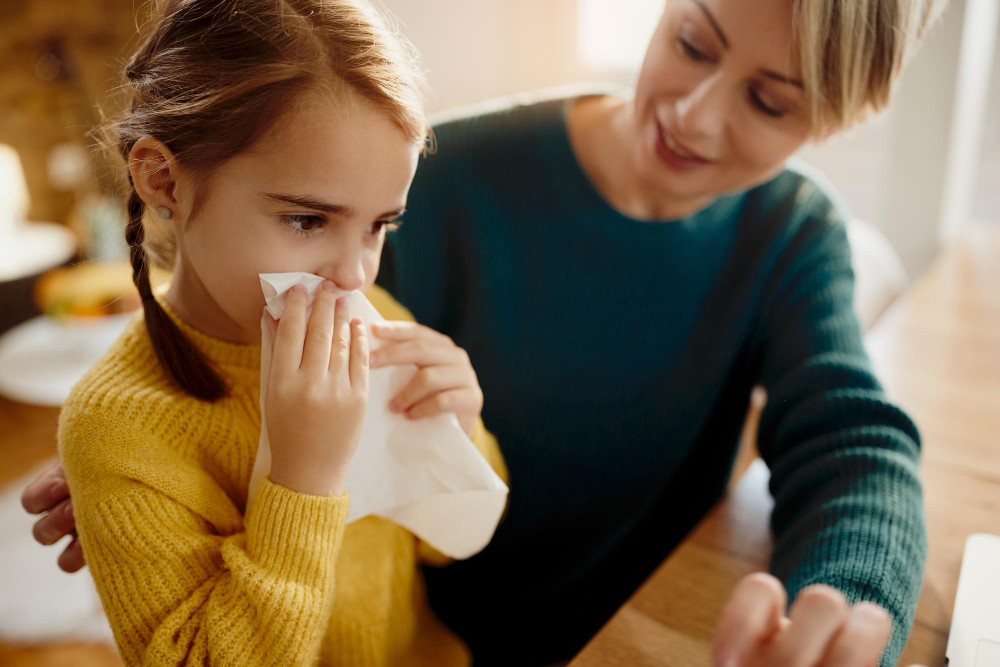
Seasonal allergies in children are common and can make your child feel uncomfortable. Many parents notice child allergy symptoms like sneezing, itchy eyes, or a runny nose during certain times of the year. Because pediatric allergy management is important, knowing how to spot and treat these allergies helps your child feel better. In this guide, you will learn about allergy relief for kids, common triggers, and ways to help your child stay healthy.
What Are Seasonal Allergies in Children?
Seasonal allergies, also called hay fever, happen when a child’s immune system reacts to things in the air. For example, pollen from trees, grass, or weeds can trigger these allergies. Children may have symptoms only during certain months, depending on what causes their allergies. Although these allergies are not dangerous, they can affect your child’s daily life. Understanding what causes them is the first step to helping your child.
Common Symptoms of Seasonal Allergies
Children with seasonal allergies often show clear signs. However, these symptoms can look like a cold. Watch for these common symptoms:
Because these symptoms can last for weeks, it is important to notice if they return each year.
Causes and Triggers
Many things in the environment can cause seasonal allergies in children. For instance, pollen is a common trigger. Here are some main causes:
Because weather and location affect pollen levels, children in some areas may have more severe symptoms. Checking local pollen counts can help you plan outdoor activities.
Diagnosis of Seasonal Allergies
If you think your child has allergies, a doctor can help. First, the doctor will ask about symptoms and family history. Sometimes, they may suggest allergy testing. For example, a skin prick test or a blood test can show what your child is allergic to. Early diagnosis helps you manage symptoms and avoid triggers. According to the CDC, proper diagnosis is key for effective treatment.
Effective Management and Treatment Options
Managing seasonal allergies in children involves several steps. While some children need medicine, others feel better with simple changes at home. Here are some effective options:
Because every child is different, your doctor may suggest other treatments. The American Academy of Pediatrics recommends using the lowest effective dose of medicine for the shortest time needed.
Prevention Tips for Parents
Although you cannot stop all allergies, you can lower your child’s risk. Try these tips:
Because prevention is easier than treatment, these steps can help your child feel better all season long.
When to See a Pediatrician
Sometimes, home care is not enough. If your child has severe symptoms, trouble breathing, or symptoms that do not improve, see a pediatrician. Also, if allergy medicine does not help or causes side effects, get medical advice. Early help can prevent problems and keep your child healthy. The CDC suggests seeing a doctor if allergies affect sleep, school, or play.
In summary, managing seasonal allergies in children takes patience and care. For the best results, consult a pediatrician for personalized advice on managing your child’s seasonal allergies.